

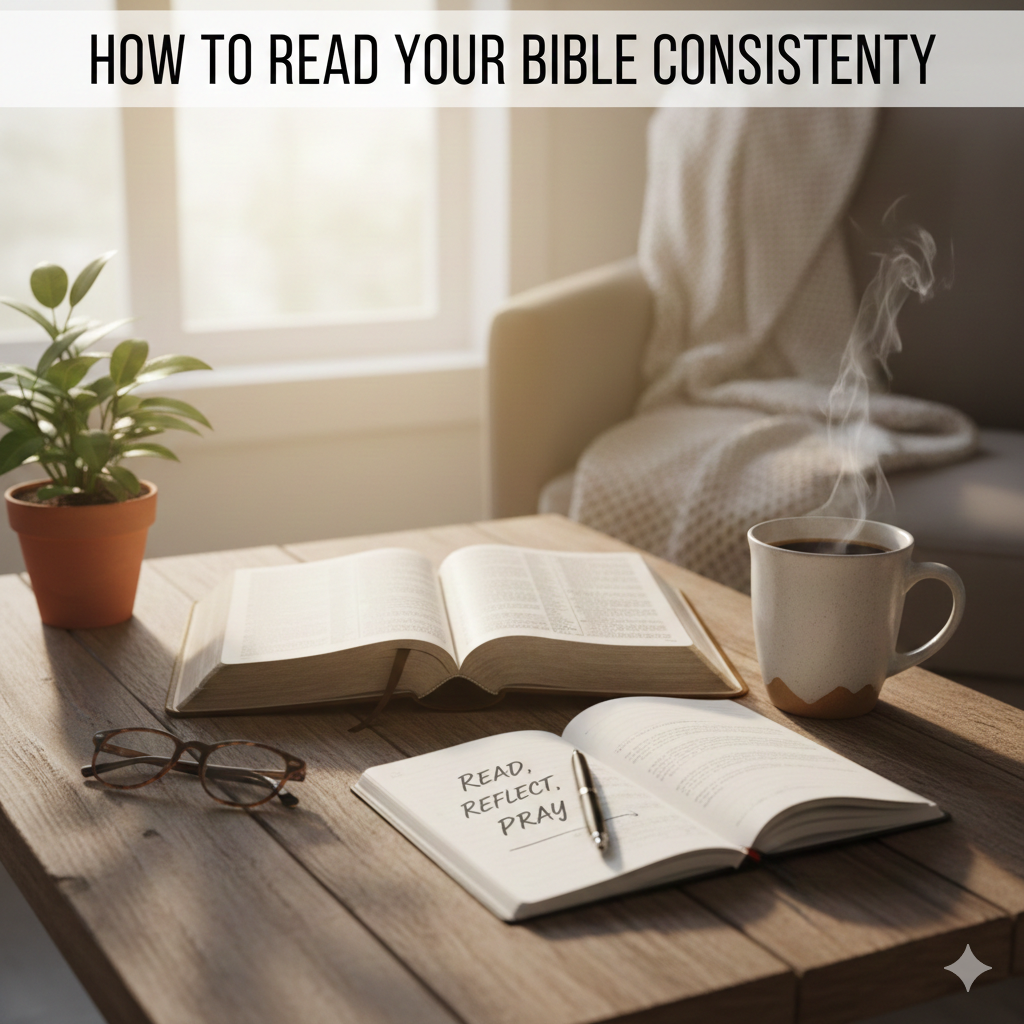
Many people want to read the Bible more consistently — not out of obligation, but desire.
Yet good intentions often fade, not because people don’t care, but because the approach doesn’t fit real life.
Instead of asking “How can I read the Bible every day?”
A better question is:
“What system could help me return to Scripture consistently?”
Consistency is not about perfection or streaks.
It’s about designing rhythms that make Scripture accessible, natural, and sustainable.
Below are practical systems you can choose from, inspired by habit-formation principles, to help Scripture become a regular part of your life — without pressure.
1. Identity First: See Yourself as Someone Who Returns to Scripture
Lasting habits begin with identity.
Rather than focusing on how often or how much you read, consider this shift:
- “I am someone who comes back to God’s Word.”
Practical system:
- When you miss a day (or a week), your system is not guilt — it’s return.
- The win is not reading daily, but not quitting.
This mindset removes shame and keeps the habit alive long-term.
2. Environmental System: Make the Bible Easy to Reach
Habits are shaped by what is visible and accessible.
Options you can choose from:
- Keep a Bible where you already pause (desk, couch, nightstand)
- Use one Bible version consistently
- Leave a bookmark at your current reading
- Keep a Bible app open on your phone’s home screen
The goal isn’t discipline — it’s reducing friction.
3. Rhythm-Based Reading (Instead of Daily Rules)
Instead of committing to every day, build a weekly rhythm.
Practical options:
- Read Scripture on specific days (ex: 3x a week)
- Choose “anchor days” (Sunday, midweek, Saturday)
- Read when you journal, plan your week, or reflect
A rhythm is more flexible than a rule — and more sustainable.
4. Small-Entry System: Always Start Small
Many reading habits fail because the starting point is too heavy.
Options for small beginnings:
- One Psalm
- One Gospel paragraph
- One verse that stands out
- One chapter, no pressure to continue
If you want to read more, you can.
If not, the system still works.
Small entries keep the door open.
5. Choose a Simple Reading Structure
Instead of rigid plans, use repeatable patterns.
Simple systems to try:
- Genre Rotation
Psalms → Gospels → Proverbs → Letters → Old Testament stories - One-Book Focus
Stay in one book until you’re done, no timeline - Theme-Based Reading
Read passages around trust, wisdom, prayer, or faith
The best plan is the one you actually return to.
6. Tracking Without Pressure
Tracking helps awareness, not performance.
Gentle tracking ideas:
- Mark days you read (no streak stress)
- Write the date and passage in a notebook
- Keep a short “Scripture Log” with one sentence reflections
The goal is not consistency perfection — it’s noticing patterns.
7. Close the Loop with Reflection or Prayer
End each reading with something meaningful.
Options:
- One-sentence prayer
- One truth you’re carrying with you
- One question to think about later
This makes the habit feel complete and satisfying, not rushed.
A Final Perspective
Consistency with Scripture is not built by forcing daily reading.
It grows through simple systems that make returning easy.
Some weeks will be full.
Some seasons will be quiet.
The habit survives when the system invites you back — not when it demands more.
You don’t need a perfect plan.
You need a grace-filled system.
Start small.
Return often.
Let consistency grow naturally.
Listen Instead of Reading
If you want to listen instead of reading you can use a Bible App and Choose a Plan:
Bible App: Youversion
Reading Plan: Bible Recap